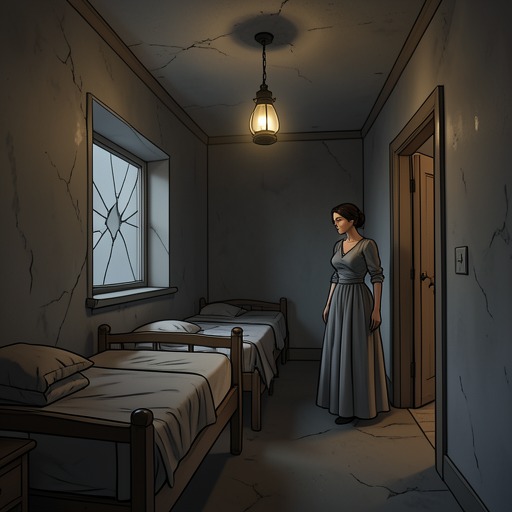
1996
Small Things Like These1996 is the year Ireland’s last Magdalen laundry closed, a retrospective date that places the book’s fictional account of institutional power and social silence against a history extending beyond its plot. The closure marks the end of the last such laundry, not the resolution of the consequences described in the book’s closing note: forced labour, separated families, lost records, and recognition delayed for years.
The date in historical context
The book’s note on the text identifies 1996 as the year the final laundry closed. It stresses that the number of girls and women concealed, confined, and forced to work in these institutions is unknown. Ten thousand is presented as a modest estimate, while thirty thousand is described as probably more accurate. The note also emphasizes how difficult it is to establish a complete account: records were destroyed, lost, or made inaccessible, and the work of the women and girls was rarely acknowledged.
The date therefore provides a clear endpoint for the operation of the last laundry, but not a complete measure of the system or its aftermath. The note links the institutions to the wider structure of Ireland’s Magdalene Laundries and Irish mother-and-baby homes, where many women lost their babies, some lost their lives, and others lost the lives they might otherwise have had. It also states that thousands of infants died in or were adopted out from the mother-and-baby homes.
The story’s institutional setting
The fictional narrative gives the laundry a public face of respectable service. The Good Shepherd Sisters run a laundry whose customers include restaurants, guesthouses, a nursing home, a hospital, priests, and well-off households; its linen is reputed to return as good as new. Against that commercial reputation circulate accounts of girls working from dawn until night, including a report of a fifteen-year-old with varicose veins from standing at the wash-tubs. Other rumors describe unmarried girls hidden away after giving birth and their babies sent abroad for adoption. The narrative presents these as town talk rather than verified individual histories, while the closing note supplies broader historical evidence of confinement and forced labour.
That gap between what is publicly known and what is said in private is central to the book’s treatment of the institutions. Bill Furlong initially encounters the laundry through its routine business and local rumor; later, his distress turns on his own conduct toward a girl there, including having accepted money and left her without asking about the baby she had asked him to ask after. The closing reference to 1996 widens that personal failure into a historical frame, without treating the fictional characters as portraits of specific individuals: the note explicitly states that the work is fiction based on no individual or individuals.
Delayed disclosure and acknowledgment
The note follows the 1996 closure with later milestones that show how slowly public recognition came. The Irish government did not apologize for the Magdalene laundries until 2013, when Taoiseach Enda Kenny did so. In 2014, historian Catherine Corless made public her discovery that 796 babies had died between 1925 and 1961 at the Tuam home in County Galway. The note also cites a Mother and Baby Home Commission report finding that nine thousand children died in eighteen of the institutions it investigated.
These later disclosures do not erase the evidentiary absences the note describes. The record is both partial and delayed: institutional records have been lost, destroyed, or withheld from access, while public acknowledgment came decades after the last laundry closed. The sequence from 1996 to the apology and historical findings makes closure a date in an unfinished process of accounting, rather than proof that the harms had been addressed.
Significance of 1996
As a temporal marker, 1996 places the story’s moral crisis within a history whose scale exceeds the plot. The fictional town’s mixture of dependable laundry service, gossip, and reluctance to believe disturbing reports echoes the larger conflict between ordinary social respectability and the hidden experiences of those confined within the institutions. The date sharpens that contrast: the last laundry’s closure was a concrete ending, but the destroyed or inaccessible records, unacknowledged labour, and later disclosures show how much remained obscured after it.
The book thus uses 1996 to connect an individual act of looking away with the longer public history of silence and belated recognition. The year gives the system a chronological endpoint while leaving its human consequences open in the historical record.